Social Media Marketing Strategies for Beginners
In today’s competitive digital world, social media has become one of the most powerful tools for businesses to connect with customers, promote their products, and build a recognizable brand. Understanding Social Media Marketing Strategies for Beginners is the first step towards creating a successful online presence and reaching the right audience. Whether you are a small business owner, entrepreneur, freelancer, or someone starting a new business, social media marketing provides opportunities to grow your brand without requiring a huge marketing budget.
As a freelance digital marketing expert in Malappuram, I understand the importance of using effective social media strategies to help businesses improve their online visibility and attract potential customers. Platforms such as Instagram, Facebook, YouTube, and LinkedIn allow businesses to communicate directly with their audiences, showcase their services, and build long-term customer relationships.
However, achieving success on social media requires more than simply creating an account and publishing posts. It involves understanding your audience, developing valuable content, maintaining consistency, and analysing your marketing performance. In this guide, we will explore practical strategies that beginners can use to build a strong social media presence and achieve their business goals
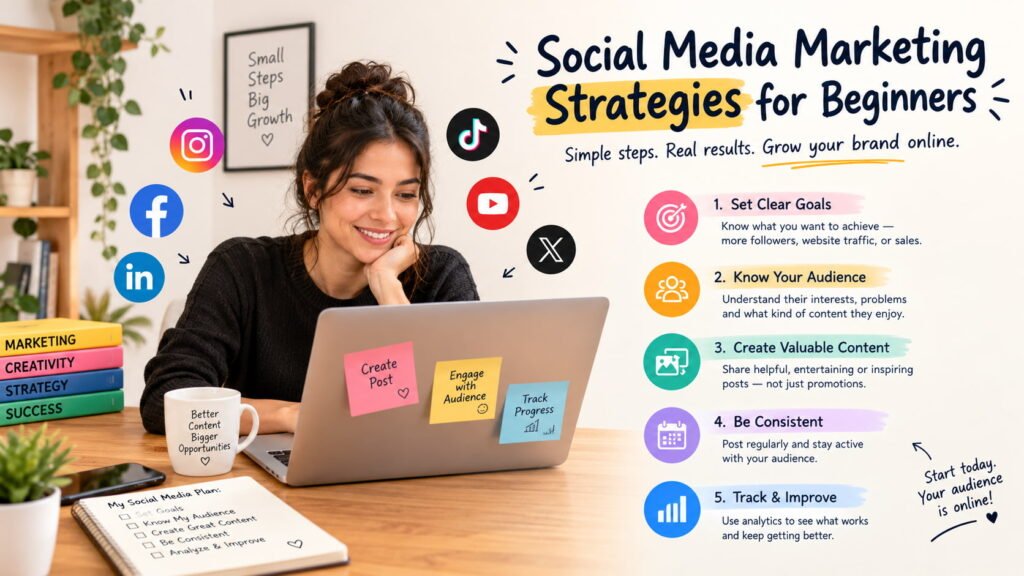
1. Understand Your Business Goals and Objectives
Before starting social media marketing, it is important to understand what you want to achieve. Having clear goals helps you choose the right platforms, create relevant content, and measure your results effectively.
Different businesses have different marketing objectives. Some may want to increase brand awareness, while others may focus on generating leads, increasing website traffic, or improving sales.
Common social media marketing goals include:
-
Increasing brand awareness and recognition.
-
Attracting new customers and followers.
-
Generating quality leads and enquiries.
-
Driving traffic to your business website.
-
Promoting products and services.
-
Building customer relationships and loyalty.
-
Increasing online sales and conversions.
Set realistic and measurable goals for your business. For example, instead of simply aiming to increase followers, set a goal to improve engagement or generate a specific number of genuine customer enquiries.
Clear objectives provide direction and make your marketing activities more effective
2. Identify and Understand Your Target Audience
Understanding your target audience is one of the most important parts of successful social media marketing. You need to know who your potential customers are, what they are interested in, and which platforms they use most frequently.
Start by identifying your audience based on:
Age and gender.
Location and language.
Interests and hobbies.
Online behaviour.
Shopping preferences.
Problems and customer needs.
For example, if you own a fashion business, your target audience may include people interested in clothing, styling, and fashion trends. If you provide digital services, your audience may include business owners, entrepreneurs, and startups looking to improve their online presence.
You can also study your competitors to understand what type of content attracts attention in your industry.
When you understand your audience, you can create relevant content that connects with their interests and encourages them to interact with your business.
3. Choose the Right Social Media Platforms
Not every social media platform is suitable for every business. Choosing the right platforms helps you reach your target audience without wasting time and resources.
Here are some popular social media platforms and how businesses can use them.
Instagram is ideal for businesses that depend on visual content. It allows brands to showcase products, share Reels, publish Stories, and communicate with customers through direct messages.
Facebook is useful for building communities, promoting local businesses, sharing updates, and running targeted advertisements. Facebook Groups and business pages can also help businesses connect with potential customers.
YouTube
YouTube is an excellent platform for video marketing. Businesses can publish tutorials, product demonstrations, educational videos, and informative content to build credibility.
LinkedIn is particularly useful for professional services, B2B marketing, networking, and building a professional brand. It helps businesses connect with industry professionals and decision-makers.
Pinterest can help businesses reach audiences looking for inspiration, creative ideas, designs, fashion, and lifestyle products.
Instead of trying to manage every platform at once, begin with two or three platforms that best match your business objectives and audience.
4. Create a Strong Social Media Marketing Strategy
A successful social media presence requires proper planning. Randomly publishing content without a clear direction can make it difficult to achieve consistent results.
One of the most useful Social Media Marketing Strategies for Beginners is developing a simple content and marketing plan before publishing anything.
Your strategy should include:
Content Planning: Decide what type of content you want to publish and how frequently you will post.
Brand Identity: Maintain consistent colours, fonts, logos, and communication styles across your social media platforms.
Posting Schedule: Create a realistic schedule to maintain consistency.
Audience Engagement: Plan how you will respond to comments, messages, and customer enquiries.
Marketing Objectives: Define what each campaign or content piece should achieve.
Performance Tracking: Monitor results to understand which strategies are working.
A well-organized strategy saves time, improves content quality, and helps you communicate your brand message more effectively.
5. Create High-Quality and Valuable Content
Content plays a major role in social media marketing. Your posts should attract attention, provide useful information, and encourage people to interact with your brand.
Focus on creating content that solves problems, answers questions, entertains your audience, or introduces your products and services.
Some effective content formats include:
Educational Content: Share useful tips, tutorials, industry knowledge, and informative posts.
Promotional Content: Showcase your products, services, offers, and new launches.
Behind-the-Scenes Content: Give your audience a look at your workplace, production process, or daily business activities.
Customer Testimonials: Share genuine customer feedback and experiences with permission.
Interactive Content: Use polls, quizzes, questions, and discussions to encourage audience participation.
Entertainment Content: Create relatable and entertaining posts that connect with your target audience.
As a graphic designer or business owner, visual presentation is equally important. Use attractive designs, readable typography, high-quality images, and consistent branding to make your content more professional.
Remember that quality and relevance are more important than publishing a large number of posts.
6. Use Short-Form Videos to Increase Engagement
Short-form videos have become an important part of social media marketing. Instagram Reels, YouTube Shorts, and Facebook Reels provide opportunities to introduce your business to new audiences.
Videos are effective because they can communicate information quickly while keeping viewers interested.
Here are some video content ideas for beginners:
Product demonstrations.
Quick educational tips.
Frequently asked questions.
Business introductions.
Behind-the-scenes videos.
Customer success stories.
Before-and-after transformations.
Tutorials and how-to guides.
Start your videos with an engaging introduction that encourages people to continue watching. Keep your message clear, use readable captions, and include a relevant call to action.
You do not always need expensive cameras or professional equipment. A smartphone, good lighting, clear audio, and creative ideas are enough to begin creating useful video content.
7. Maintain a Consistent Posting Schedule
Consistency helps your audience stay connected with your brand. Regular posting gives people more opportunities to discover your business and interact with your content.
However, posting frequently without maintaining quality can negatively affect your content strategy. Develop a schedule that works with your available time and resources.
A beginner-friendly weekly content calendar could look like this:
Monday: Educational content or marketing tips.
Tuesday: Product or service showcase.
Wednesday: Short-form video or Reel.
Thursday: Customer testimonial or review.
Friday: Informative carousel post.
Saturday: Promotional content.
Sunday: Interactive stories or audience questions.
You can prepare your content in advance and use scheduling tools to organize your publishing activities.
Review your audience insights to understand when your followers are active and adjust your posting schedule accordingly.
8. Use Hashtags and Keywords to Improve Discoverability
Hashtags and keywords help people discover relevant content on social media. Using appropriate search terms can improve your content’s chances of appearing in relevant searches.
Choose hashtags related to your business, industry, location, and content topic.
For example, a digital marketing professional in Malappuram could use:
#DigitalMarketing
#SocialMediaMarketing
#DigitalMarketingKerala
#MalappuramBusiness
#ContentMarketing
#KeralaEntrepreneurs
Apart from hashtags, include relevant keywords naturally in your captions, profile descriptions, video titles, and content descriptions.
For example, if you provide graphic design services, use relevant phrases such as graphic design services, logo design, branding, and social media poster design.
Avoid keyword stuffing and irrelevant hashtags. Your content should always sound natural and provide value to the audience.
9. Engage With Your Audience and Build Trust
Social media is not just a platform for advertising. It is also a place where businesses can develop meaningful relationships with customers.
Engagement helps you understand customer needs, answer questions, and create a stronger connection with your audience.
You can improve engagement by:
Responding to comments regularly.
Answering direct messages promptly.
Asking questions in your captions.
Conducting polls and quizzes.
Sharing customer feedback.
Encouraging followers to share their opinions.
Appreciating customers who mention your business.
Make your communication friendly, helpful, and professional. When customers receive genuine attention, they are more likely to trust your business and consider your products or services.
Building trust takes time, but it can create long-term benefits for your brand.
10. Explore Paid Social Media Advertising
Organic social media marketing helps businesses build an audience over time. However, paid advertising can provide additional opportunities to reach specific groups of potential customers.
Platforms such as Meta Ads Manager allow businesses to advertise across Facebook and Instagram.
You can create campaigns based on different objectives, including:
Brand Awareness: Introduce your business to more people.
Traffic: Encourage users to visit your website or landing page.
Engagement: Increase interactions with your social media content.
Lead Generation: Collect potential customer enquiries through lead forms.
Sales: Promote products and encourage purchases.
Before spending money on advertisements, identify your target audience and campaign objective. Create attractive advertisements with clear messages and strong calls to action.
Start with a manageable budget, test different creatives, and monitor campaign performance. Avoid spending money without understanding your advertising objectives.
Paid advertising works best when combined with valuable organic content and a well-optimized business profile.
11. Track Your Performance Using Analytics
Successful social media marketing involves continuously measuring and improving your results. Analytics help you understand how your content performs and whether your marketing activities are achieving their objectives.
Most social media platforms provide built-in analytics tools that offer valuable information about audience behaviour and content performance.
Some important metrics to monitor include:
Reach: The number of unique people who see your content.
Impressions: The total number of times your content is displayed.
Engagement Rate: The level of interaction your content receives compared with its reach or audience size.
Follower Growth: How your social media audience changes over time.
Website Traffic: The number of visitors coming to your website through social media.
Click-Through Rate: The percentage of people who click on your links after seeing your content or advertisement.
Conversions: The number of people completing valuable actions such as purchases, registrations, or enquiries.
Review your analytics regularly to identify successful content formats and areas that need improvement.
Do not measure your success only by likes and followers. Focus on the results that directly support your business objectives.
12. Build a Strong Brand Identity Across Platforms
A consistent brand identity makes your business recognizable and helps customers remember your products or services.
Your social media profiles should communicate the same brand personality, values, and visual style.
Maintain consistency in:
Logo and brand colours.
Typography and graphic elements.
Profile and cover images.
Content design and presentation.
Tone of voice and communication.
Business descriptions and contact information.
For example, a premium fashion brand may use minimal designs, elegant typography, and professional product photography. A youthful food brand may use vibrant colours, creative graphics, and entertaining videos.
A strong visual identity creates a professional impression and helps differentiate your business from competitors.
13. Use Social Media to Drive Website Traffic and Generate Leads
Social media should not work independently from your other digital marketing activities. Connecting your social media platforms with your website can help you generate more business opportunities.
Include your website link in your social media profiles and direct users to relevant service pages, product pages, blogs, or contact forms.
You can also share your blog articles, helpful resources, portfolio projects, and business updates to encourage people to explore your website.
Use clear calls to action such as:
Visit our website to learn more.
Contact us for professional services.
Explore our latest products.
Send us a message for enquiries.
Read our latest blog for useful tips.
Make sure your website is mobile-friendly, easy to navigate, and provides clear information about your business.
Combining social media marketing with website optimization can create a stronger digital presence and improve your opportunities to attract customers.
Common Social Media Marketing Mistakes Beginners Should Avoid
When starting social media marketing, beginners often make mistakes that can affect their results. Understanding these mistakes can help you build a better strategy.
1. Posting Without a Plan: Publishing random content without a marketing objective can make your brand message unclear.
2. Ignoring Audience Engagement: Not responding to comments and messages can reduce customer trust.
3. Focusing Only on Followers: A large following does not always mean more customers or better business results.
4. Using Low-Quality Visuals: Poor images and inconsistent designs can create an unprofessional impression.
5. Promoting Products Too Often: Constant advertisements without informative or entertaining content can make audiences lose interest.
6. Ignoring Analytics: Without measuring performance, it becomes difficult to understand what is working.
7. Expecting Instant Results: Social media growth takes time, patience, consistency, and continuous improvement.
Avoiding these mistakes will help you develop a more effective marketing approach and create a stronger connection with your audience.
Conclusion:
Learning Social Media Marketing Strategies for Beginners is an important step for anyone who wants to establish a strong online presence and grow a business in today’s digital environment. From identifying your target audience and choosing the right platforms to creating engaging content, running advertisements, and analysing performance, every strategy contributes to your overall marketing success.
Remember that successful social media marketing is not about being active on every platform or gaining thousands of followers overnight. It is about reaching the right audience, delivering valuable content, maintaining consistent communication, and building genuine relationships.
Start with simple strategies, experiment with different content formats, and regularly evaluate your results. As your experience grows, you can develop more advanced campaigns and improve your overall digital marketing performance.
Whether you are an entrepreneur, freelancer, startup owner, or small business owner, implementing the right social media marketing strategies can help you increase brand awareness, attract potential customers, and create new business opportunities.
Start your social media marketing journey today, stay consistent, and turn your online presence into a powerful platform for business growth.